

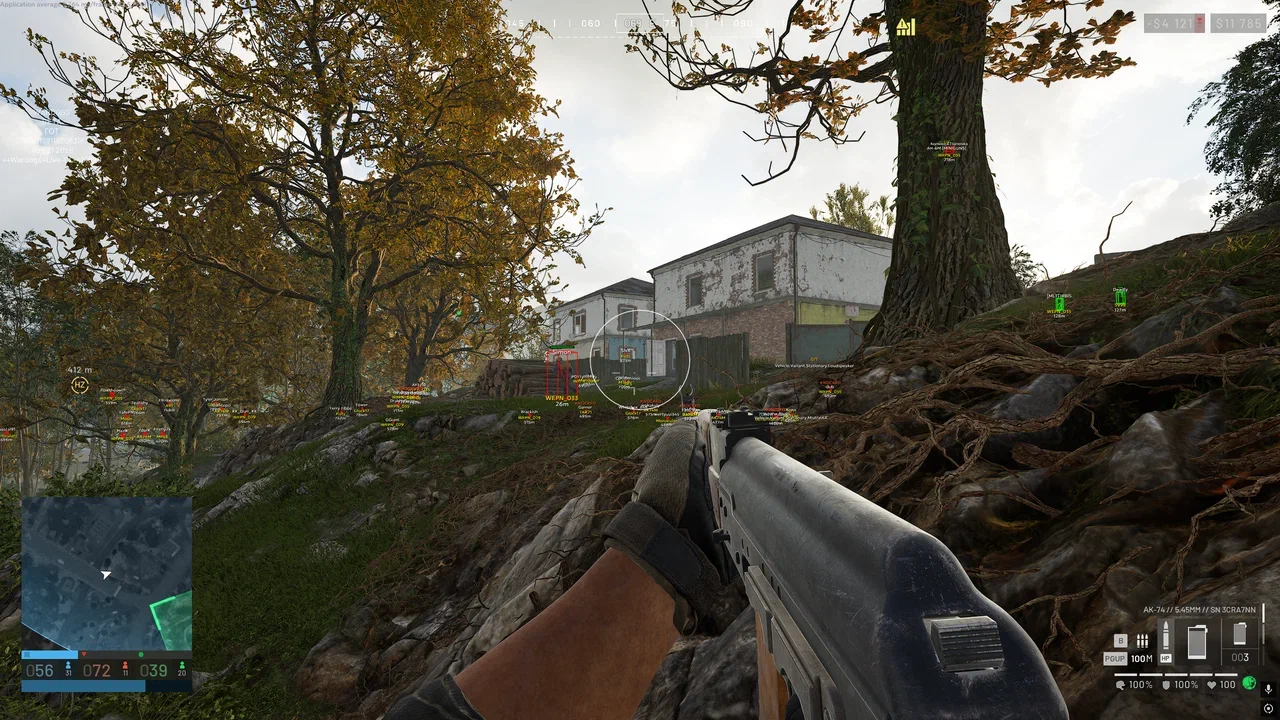
WARDOGS is the tactical all-out warfare FPS from British studio Bulkhead, published by Team17, hitting Steam Early Access on 10 September 2026. It picked up over a million wishlists before a single paying player had loaded in, and its closed beta pulled nearly half a million people with more than 100,000 concurrent at peak.
If you have only seen clips, it looks like Battlefield with a build menu. It is not. WARDOGS is closer to a King of the Hill mod grown into a full game — three teams, one moving objective, and an economy that follows you from match to match.
This guide covers what the game actually is: how a match is scored, what the Control Zone and Hot Zone do, how money works, and what you are supposed to be doing in your first few hours.
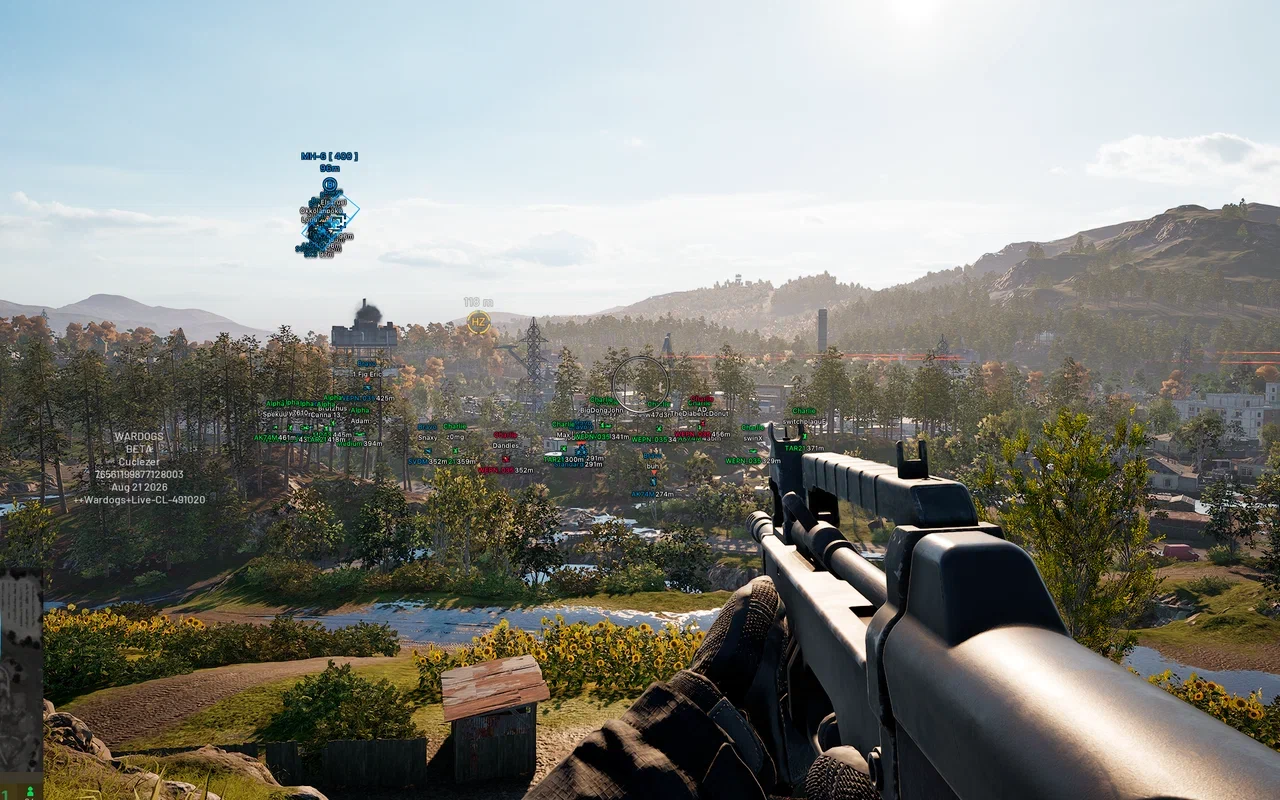
The Short Version
- Up to 100 players, split into three teams — roughly 33 v 33 v 33.
- A 256 km² map (16 x 16 km) with a randomised 2 x 2 km Control Zone inside it.
- Every 30 seconds, whichever team has the most players inside the Control Zone scores one point.
- First team to 100 points wins.
- Kills do not score points. They pay you cash. That is it.
- You start your account with $10,000 and buy a loadout before every life. Money persists between matches and does not refill when you die.
- Built in Unreal Engine 5. Windows, Steam, kernel-level anti-cheat.
- No battle pass. No microtransactions.
That scoring rule is the one most new players get wrong, so it is worth repeating: you win by standing in a square, not by topping the scoreboard.
How a Match Actually Works
Three teams, not two
Almost every large-scale shooter you have played is two-sided. WARDOGS puts a third army on the field, and that single change rewrites the whole flow of a match.
When you commit everything to pushing one enemy team, you hand your flank to the other. The team currently winning is the team everyone else has a reason to shoot. Leads collapse. Stalemates break for no obvious reason. A fight you were winning turns into a three-way grinder because a third force walked into it from a direction nobody was watching.
Practically, this means:
- Never over-commit. Clearing one side of a building is worth very little if the third team is stacking the other side.
- Let two teams bleed each other. Arriving late to somebody else's fight is one of the strongest plays in the game.
- Watch your own team's score. If you are at 85 points and the other two are at 40, expect to be everyone's problem.
The Control Zone
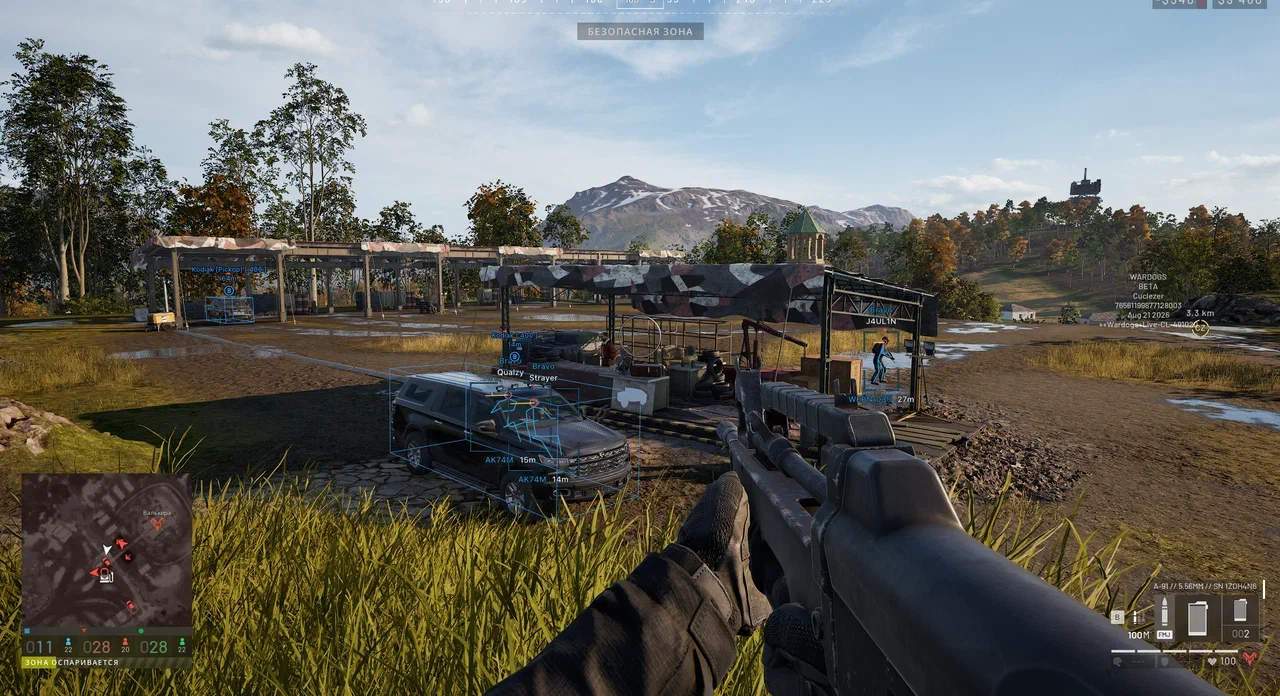
The Control Zone is a 2 x 2 km square dropped at a randomised position inside the wider map. It is not a flag or a capture circle you stand on top of — it is a piece of terrain the size of a small town, and holding it means having bodies spread across it.
Every 30 seconds the game counts heads. Most players inside wins the tick. One point. Repeat until somebody reaches 100.
Because the zone is placed randomly, no two matches open the same way. One round you are fighting over an industrial yard, the next it is a river crossing, the next a hillside village. The terrain decides whether vehicles matter, whether snipers matter, and whether it is worth building anything.
The Hot Zone
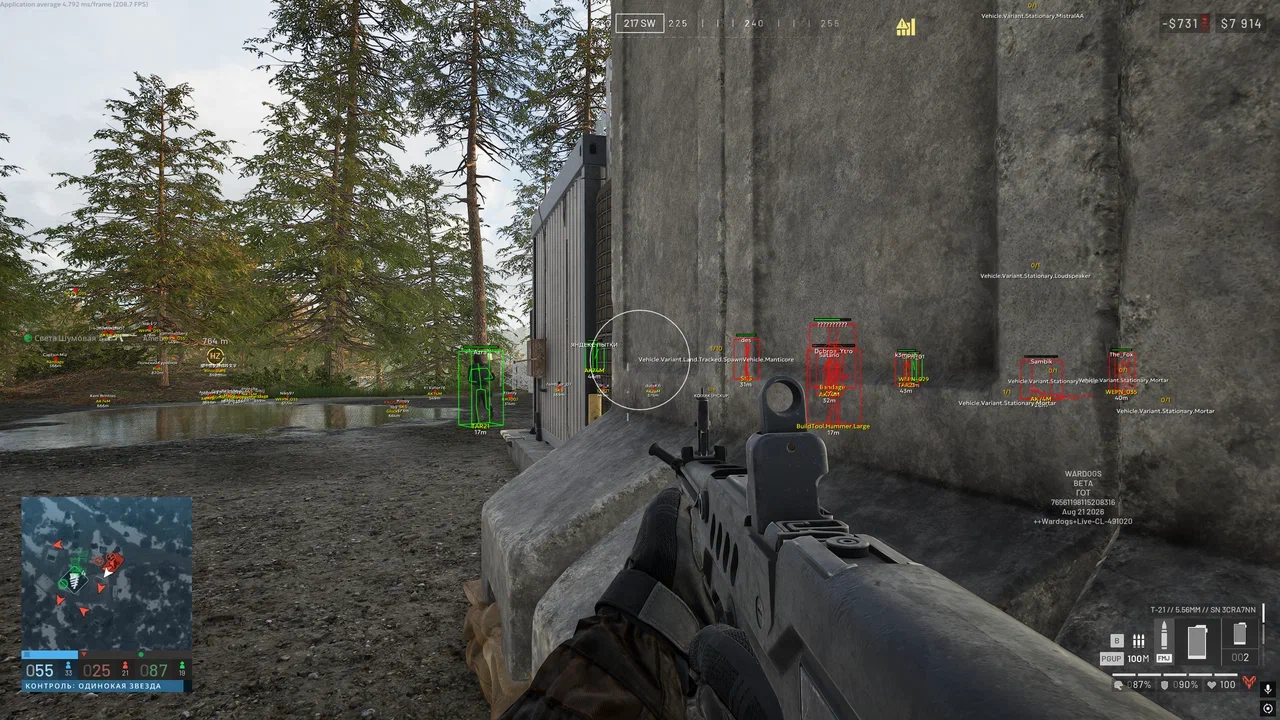
Inside the Control Zone sits a smaller, shifting Hot Zone, and it is the most important mechanic in the game.
Every player standing in the Hot Zone counts as two toward the head count, and earns double cash.
Do the maths and the consequences are obvious. Ten players in the Hot Zone beat nineteen spread across the rest of the Control Zone. A squad that pushes into the Hot Zone and survives is worth more than a platoon holding a hill 800 metres away — and they are getting paid twice as fast for the privilege.
This is why "just hold the tower and build" is a losing strategy even though it feels safe. The Hot Zone is where matches are decided, and it moves, so you cannot fortify it in advance.
If you take one thing from this guide: find the Hot Zone marker, and be inside it as often as you can survive being there.
The Cash Economy
WARDOGS has no classes. There is no medic, no engineer, no assault. There is a shop, and whatever you buy before you spawn is your role for that life.
You start with $10,000 — once
That $10,000 is an account-level balance, not a per-match allowance. It carries across matches, and critically, it does not top back up when you die. Lose your kit, you have lost the money you spent on it.
Everything about how the game plays flows from this. A fully kitted loadout with a good rifle, optics, armour, utility and a vehicle is a real bet. Dying to a mortar 40 seconds after you spawn is a real loss. The HUD shows your profit or loss for the current life in the corner, which is either motivating or deeply upsetting depending on how the last ten minutes went.
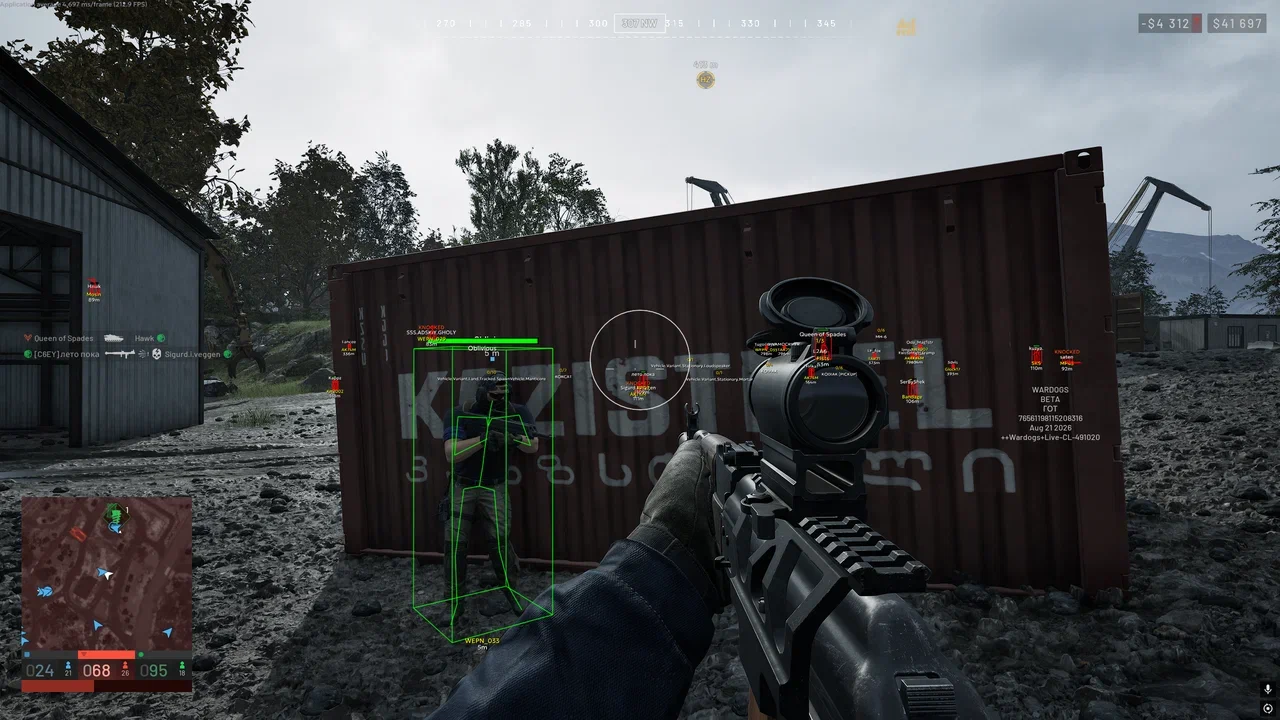
How you earn
Combat pays, but it is nowhere near the whole picture. Cash comes from doing things that help your team win:
- Reviving squadmates
- Transporting allies to the fight — driving and flying people to the zone pays extremely well
- Delivering supplies and running logistics
- Spotting enemies for your team
- Holding objectives and being present in the zone
- Building fortifications on contested ground
- Kills, which pay cash but score nothing
Double all of that inside the Hot Zone.
The result is that a player who never wins a gunfight can end a session richer than someone who went 40-5, purely by flying a transport helicopter back and forth. That is an unusual and genuinely good design choice — it means the boring, necessary jobs are the ones that fund your next rifle.
Gold bars
Cash you do not need can be converted into gold bars, the long-term currency spent in the Gold Market on cosmetics. Since there is no battle pass and no microtransactions, gold is the only cosmetic progression in the game, and it is earned entirely by playing.
Do not rush it. Converting money early, before you have a stable income, is how people end up spawning with a starter rifle and no plates for three matches straight.
Loadouts: Buy Your Role
Before each life you spend at the shop. Weapons, optics, armour, utility and vehicles all come out of the same pocket.
Some practical guidance for the first few hours:
- Buy cheap and live. The T-21 and similar entry-tier rifles are perfectly capable. Gunplay in WARDOGS is snappy and forgiving; expensive guns do not carry bad positioning.
- Utility beats optics. Bandages, build tools and smoke will save more money than a better scope will earn.
- Do not buy a vehicle you cannot protect. A helicopter is a large, expensive, extremely visible purchase. Losing it 90 seconds in is a brutal way to learn.
- Buy the hammer. A build tool is cheap and pays for itself. Sandbags and Hesco blocks placed on contested ground near a tower your team holds earn steadily and make the position survivable.
- Match the terrain. Check where the Control Zone landed before you spend. Open valley means optics and vehicles. Dense industrial means short range and utility.
Vehicles, Building and Destruction
WARDOGS is a combined-arms sandbox, so the infantry fight is only one layer.
Vehicles run from light transport through armoured ground vehicles like the tracked Manticore, up to helicopters such as the MH-6 and UH-TYE 800. Artillery tanks can shell positions from well outside the fight. Bulkhead has said more vehicle types, including fighter jets, are planned during Early Access.
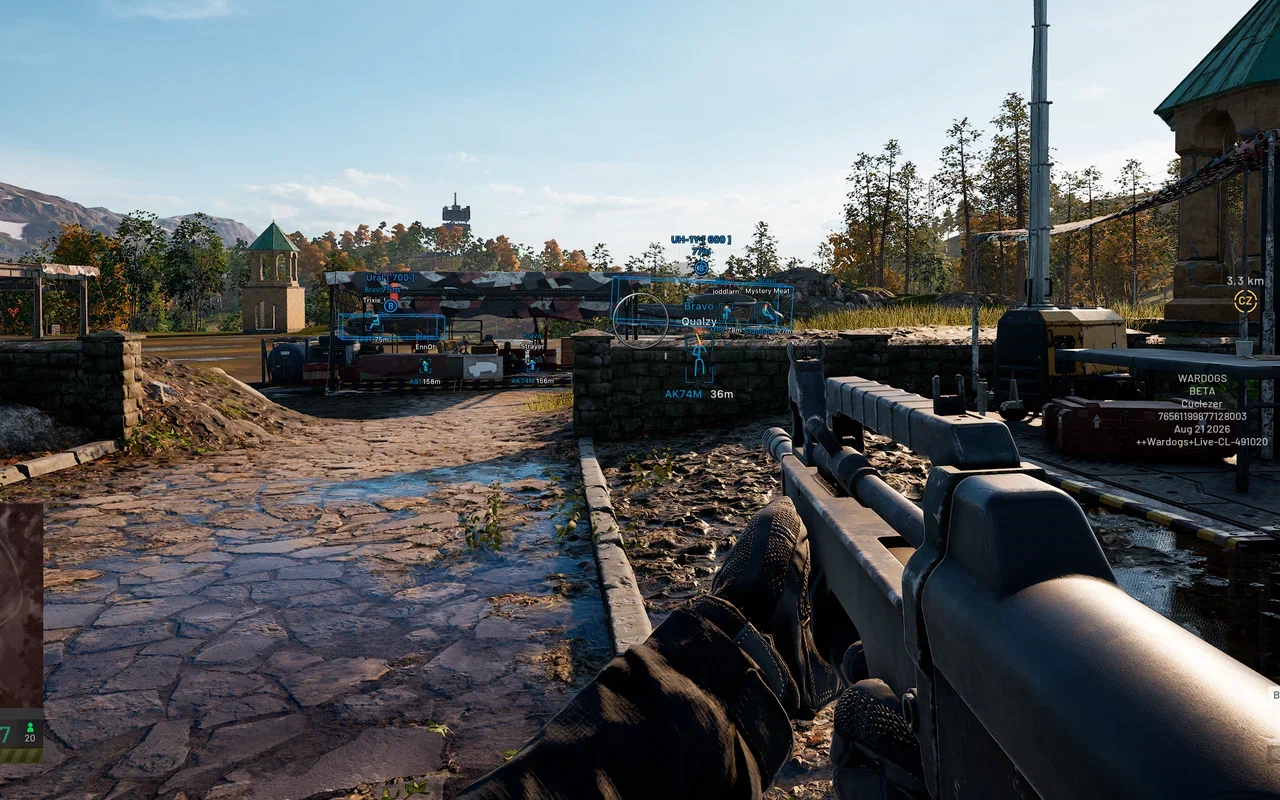
Building is a core system, not a gimmick. Forward operating bases, towers, sandbag lines and Hesco walls all get placed by players, and they meaningfully change how a piece of ground plays. The counterweight is destruction — walls and buildings come apart under rockets and heavy vehicles, so no fortification is permanent.
There is a real tension here that the beta exposed: teams that turtle on a FOB and build endlessly leave the Hot Zone empty and lose anyway. Building is a tool for holding contested ground, not a substitute for contesting it.
Local proximity voice chat ties it together. You can hear teammates nearby — and enemies. Sneaking up on a position and hearing three people arguing about who lost the truck is a genuine part of the experience.
What You Need to Run It
Bulkhead's published requirements for the Steam release:
Minimum — targeting 1080p Low at 60fps (upscaled)
- Windows 10 (64-bit)
- Intel Core i5-8600 or AMD Ryzen 5 3500
- 16 GB RAM
- NVIDIA GTX 1660 or Radeon RX 590
- 50 GB storage
Recommended — targeting 1440p Medium at 70+ fps native, or 4K Medium at 60+ upscaled
- Windows 11 (64-bit)
- Intel Core i7-12700K or AMD Ryzen 7 5700X
- 16 GB RAM
- NVIDIA RTX 3070 or AMD Radeon RX 6700 XT
- 50 GB storage
16 GB of RAM appears in both columns, which for a 100-player Unreal Engine 5 sandbox is on the optimistic side. If you are already tight on memory, expect that to be your bottleneck before your GPU is.
The game runs kernel-level anti-cheat, which has its own implications for what else you can have running. We covered that in detail here: Does WARDOGS Have Anti-Cheat? EAC, Kernel Level and Ban Risk Explained.
Early Access: What You Are Buying Into
WARDOGS launches into Early Access on 10 September 2026 at €39.99 (or €49.99 for the Supporter Edition), with Bulkhead estimating one to two years in Early Access before a 1.0 release. The price is expected to rise at full launch.
The stated roadmap covers more maps, weapons and vehicles, deeper progression, seasonal meta-games and reward systems, plus balance work driven by player feedback.
Two things worth being clear-eyed about:
- The player count is contentious. 100 players across three teams on a 256 km² map means a lot of empty ground. Beta feedback split between "the scale is the point" and "33 v 33 v 33 is too thin". Bulkhead has heard it; whether it changes is a live question.
- Cheating arrived immediately. ESP and aimbots were circulating within roughly a day of the closed beta going live. That is not unusual for a high-profile Unreal Engine 5 shooter, but it does mean the anti-cheat situation will define a lot of the Early Access period.
FAQ: WARDOGS Basics
Is WARDOGS a battle royale or an extraction shooter?
Neither. It is a three-team King of the Hill mode at 100-player scale. There is no shrinking circle and no extraction — you fight over a fixed Control Zone until a team reaches 100 points. The confusion comes from the persistent money, which feels extraction-adjacent but works differently: your cash is account-level and you do not lose a stash, you lose whatever you spent on the current loadout.
How do you actually win a match in WARDOGS?
Have more players inside the Control Zone than the other two teams when the game checks every 30 seconds. Each check your team wins is one point, and the first to 100 takes the match. Kills contribute nothing to the score — they only pay cash.
What is the Hot Zone and why does it matter?
A smaller zone inside the Control Zone where every player counts double toward the head count and earns double cash. It moves during the match. It is the highest-value ground on the map by a wide margin, and matches are usually decided by which team is willing to keep bodies in it.
Do I lose all my money when I die?
No — you lose what you spent on that life's loadout. Your account balance carries over between deaths and between matches, but it never automatically refills. The $10,000 you start with is a one-time stake, so early on it is worth buying cheap and building a buffer.
Is there a battle pass or microtransactions?
No. Bulkhead has confirmed neither. Cosmetics come from the Gold Market, paid for with gold bars you convert from in-game cash.
Does WARDOGS have controller or console support?
The Early Access release is Windows / Steam only. Bulkhead has not announced console versions. Steam Deck and Linux are not supported, largely because of the kernel-level anti-cheat.
Where to Go Next
If you are getting started, the fastest way to stop feeling poor is to understand the economy properly — we broke it down in WARDOGS Money Guide: How to Make Cash Fast.
And if you are weighing up how the anti-cheat situation affects you, either as someone getting killed through walls or as someone considering the other side of it, start here:
👉 Does WARDOGS Have Anti-Cheat? EAC, Kernel Level and Ban Risk Explained
WARDOGS is at its best when you stop playing it like Battlefield and start playing it like an economy sim with guns. Buy cheap, get in the Hot Zone, drive people around, and let the other two teams shoot each other.